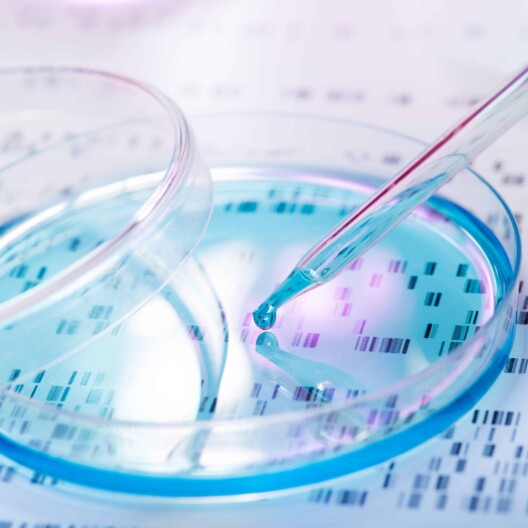
Earlier this week, I had the opportunity to speak again with Colin O’Keefe of LXBN regarding last week’s oral arguments in Association for Molecular Pathology v. Myriad Genetics. In the interview, I share some quick observations on the oral arguments and offer my thoughts why I believe the Justices will “split the baby” with their ruling.
Tag Archives: Genetic Test
Preparing to Comply With the HITECH Final Rule
Posted in Genetic Testing; Health Care IT; PrivacyAs reported in my January 24th, 2013 post, the Office for Civil Rights of the U.S. Department of Health and Human Services (HHS) issued an omnibus final rule (the Rule) implementing changes in current regulations under the Health Insurance Portability and Accountability Act of 1996 (HIPAA), pursuant to the Health Information Technology for Economic and Clinical Health Act (HITECH Act). In addition to finalizing proposed regulations set forth in a proposed rule dated July 14, 2010, it also addressed other HIPAA provisions. It also finalized a proposed rule issued in 2009 that implements the HIPAA-related genetic privacy provisions of the Genetic Information Nondiscrimination Act (GINA). Continue reading this entry
Genetic Testing and Screening of Children: Ethics and Best Practices
Posted in Genetic Testing; Genomics; Privacy; UncategorizedThe application of medical technology in the pediatric setting must serve the best interest of the child. Genetic testing of children and infants presents unique challenges. In contrast to the testing of adult patients, most children cannot understand the risks and benefits or provide informed consent. The American Academy of Pediatrics (AAP) and the American College of Medical Genetics and Genomics (ACMG) recently issued recommendations regarding genetic testing or screening of infants and children. In Ethical and Policy Issues in Genetic Testing and Screening of Children (“Report”), the AAP and ACMG review the scenarios in which genetic testing or screening of minors may occur and recommend best practices for such testing.Continue reading this entry
China Issues Human Genetic Resources Management Regulations
Posted in Personalized Medicine; UncategorizedThose seeking to conduct research involving human genetic material within the People’s Republic of China or to import into China such material should review China’s recently issued draft regulations (“Draft”) for the management of its human genetic resources. The regulations apply to the collection, preservation, research, development, immigration and other activities involving human genetic material.
The Draft provides provides that only legal entities established by law in China may engage in the collection and preservation of human genetic material. Foreign entities can conduct research with the cooperation of a Chinese entity. Such cooperation shall be subject to the approval of Ministry of Science and Technology of P.R.C (MOST). In addition, the foreign entity shall ensure that staff from the Chinese entity take part in the substantive research and development activity during the collaboration. Though the Draft does not provide that the Chinese party will retain title to any intellectual property developed from the collaboration, the Chinese entity is required to provide a report to MOST regarding the research and development activities within three months from the ending of the international cooperation. The Draft allows the ownership of intellectual property generated from the collaboration to be decided by agreement between the Chinese and foreign entities.
The Draft also notes that the export of human genetic resource sourced from the territory of China shall be subject to the approval of MOST. Because the Draft prohibits trading of human genetic resources, the foreign receiving unit must be the foreign party to the international cooperation approved by MOST. Human genetic resource material imported into China shall be registered with MOST.
A copy of the Draft Regulation on Human Genetic Resources 2012 is attached.
Special thanks to Foley & Lardner’s Max Lin for summarizing the Draft regulations. Max is resident in Foley’s Shanghai office.
Status Update on the Genetic Testing Study
Posted in AIA; Diagnostic Methods; Genetic Testing; Personalized MedicineThe U.S. Patent Office recently announced that it will not be delivering its report on Genetic Testing as required under Section 27 of the America Invents Act (“AIA”) by the June 16, 2012 deadline.Continue reading this entry
CMS Announces Public Meeting To Discuss Medicare Payments, New Genetic Test Codes; Guest Post By Judith A. Waltz
Posted in Medicare and Medicaid Services; Payor IssuesPatent-Eligibility of Diagnostic Patents Reconsidered in Canada
Posted in Diagnostic Methods; Gene Patents; Genetic TestingThe Canadian Patent Office released today practice guidelines regarding the patent-eligibility of medical diagnostic methods and medical methods. The practice guidance are in effect immediately and until further notice, and in place of any contrary guidance presently in the Canadian Manual of Patent Office Practice (MOPOP, the Canadian equivalent to the US MPEP, setting forth examination criteria for patent applications).
Diagnostic Methods
The guidance document indicates that many diagnostic methods can be thought of as comprising two distinct aspects: data acquisition steps and data analysis steps. A claim often contains one or more data acquisition steps, such as a step for determining, measuring, identifying, assaying, etc. which may be implicit or explicit. Diagnostic methods are patentable before the Canadian Patent Office if the claim describing the method satisfies all the requirements of patentability, i.e., novelty, inventive, useful, sufficiently disclosed and unambiguously defined and contains an inventive concept that is statutory.
In order to be patentable, the inventive concept of the diagnostic method claim must provide a solution to a technical problem and either have physical existence or manifest a discernible effect or change. If the claim includes at least on step of physically acquiring data from an analyte (such as a substrate, marker, tissue, body, for example) then the inventive concept is statutory. However, where a known analyte had been previously assessed using the same or similar technique to those in the claim, the inventive concept may therefore be limited to the significance, understanding or interpretation of the acquired data. In these situations, the claim is not statutory because the inventive concept is limited ot the interpretation of the acquired data.
Medical Uses
The guidance also emphasizes that medical methods are not statutory in Canada, while medical use claims are permitted, as long as do not equate to medical or surgical methods and they satisfy all other requirements of patentability.
For patent-eligibilty, the inventive concept of a medical use claim must provide a solution to a technical problem and have either physical evidence or manifest a discernible effect or change. If a claim to a medical use includes a dosage regime or range for the purpose of defining patentability, the inventive concept does not need to include that dosage regime or range if the use itself meets all the requirements for patentability. In contrast, if the inventive concept requires a dosage regime or range, then the inventive concept is considered to be a methods of medical treatment, and therefore not patent-eligibility.
Similarly, where the inventive concept necessary to support patentability only serves to instruct a medical professional “how” or “when” to treat a patient, rather than “what” to use, this may not be patent-eligible as the claim would encompass a method of medical treatment.
Prometheus’ Claims in Canada
As those in the medical industry reconsider US patent strategies in light of Prometheus and the expected US PTO guidance for examiners for medical diagnostic methods, (see our posts of March 20, 2012 and March 25, 2012), the patenting of similar technologies in other jurisdications is of concern as global patenting strategies adopt to the uncertainty of the application of Prometheus by the US PTO.
Canada’s recent guidance appears to follow the US Supreme Court holding that such claims are not patent-eligible for failing to claim a patent-eligible method.
The “determining” step of the Prometheus claims was stated by the US Supreme Court to add nothing of signficance to the art, and merely told doctors to engage in well-understood, routine, conventional activity previously engaged in by scientists who work in the field. In interpretating the “determining” element under the Canadian guidelines, the inventive concept would be limited to significance, understanding or understanding of the acquired data (as stated by the “wherein” clause of the claim) because the element was previously assessed using the same or equivalent analytical techniques known in the art.
The “wherein” clause would also fail to rescue the claim under the Canadian guidelines as it could be argued to be an expression of the understanding of the discovery of the significance of the acquired data.
Finally, the “administering” step also was admitted to be known to those in the art and could be precluded from the claim in Canada as being directed to claiming a method of medical treatment.
However, if a diagnostic method is tied to the use of a therapeutic and that use would meets all the other requirements of patentability then the claim is more likely to possess the requisite inventive concept. In addition, if the “determining” step of the claim utilizes analytical techniques unknown to the skilled artisan, the claim is more likely patent-eligible.
A copy of the practice guidelines is available here.
Video Interview: Discussing Mayo v. Prometheus With LXBN TV
Posted in Companion Diagnostics; Gene Patents; Genetic Testing; PrometheusThe other day I had the opportunity to speak with Colin O’Keefe of LXBN TV on the subject of Mayo Collaborative Services v. Prometheus Laboratories, Inc. In the short interview, I explain the background of the case, offer my thoughts on why Prometheus’ patent wouldn’t have a detrimental impact on medical research and give my thoughts on what this means for the Myriad “gene patenting” case.
Presidential Commission to Study Management of, and Access to, Human Genome Sequencing Data
Posted in Bioethics; Genetic Testing; Genomics; PrivacyOn November 24, 2009, President Obama established the Presidential Commission for the Study of Bioethical Issues (Commission) to advise him on bioethical issues generated by novel and emerging research in biomedical and related areas of science and technology. As part of this initiative, the Commission issued a Notice on March 27, 2012 (Federal Register) seeking comments on the ethical issues raised by the ready availability of large-scale human genome sequencing data.
Privacy And Access
Tremendous technological advances have reduced the cost of sequencing to the point where relatively inexpensive, rapid sequencing of whole genomes is not only likely but imminent. The emergence of this new technology raises, for the Commission, issues how this information can and ought to be collected, used, and governed. Of particular initial interest are issues relating to the privacy of and access to this information by patients, researchers, and medical professionals.
The Commission is particularly interested in comments informing policies, practices, research, and perspective on issues of privacy and data access as they relate to the integration of large scale human genome sequencing into research and clinical care. Of additional interest are models and mechanisms for protecting privacy in both genetic/genomic databases of sensitive information and the sharing and management of information and access to large-scale human genomic data.
To Submit Comments
Individuals, groups, and organizations interested in commenting may submit comments by email to info@bioethics.gov or by mail to the following address:
Public Commentary, The Presidential Commission for the Study of Bioethical Issues, 1425 New York Ave. NW., Suite C-100, Washington, DC 20005.
To assure consideration, comments must be received by May 25, 2012.
For additional insight into the Commission’s thinking on the issues concerning genetic testing, see the Commission’s blog.
Gene Patenting Case Heads Back to Federal Circuit
Posted in Companion Diagnostics; Gene Patents; Genetic TestingThe U.S. Supreme Court has sent the ACLU “gene patenting” case back to the Federal Circuit for reconsideration in light of its unanimous decision in Mayo Collaborative Services v. Prometheus Laboratories, Inc., No. 10-1150 (S. Ct. 2012). For a review of the issues, please see Foley & Lardner’s client alert “Supreme Court Tells Federal Circuit to Reconsider Patent Eligibility of Isolated DNA Claims.”
Personalized Medicine Market Growing Amid Challenges
Posted in Biomarkers; Companion Diagnostics; Genetic TestingOn the same day that the personalized medicine testing market was reported to have exceeded $28 billion in 2011, the New England Journal of Medicine (NEJM) also reported a perceived stumble to the use of genomic tests that serve personalized medicine. Continue reading this entry
Gene Patenting Debate Slips Into Patent Reform Bill
Posted in Diagnostic Methods; Gene Patents; Genomics and Personalized Medicine Act; Infringement; Patent ReformOn June 23, 2011, the United States House of Representatives passed the “Leahy-Smith America Invents Act” (H.R. 1249) to amend title 35 of the United States Code, to provide for patent reform. Within the numerous provisions related to the examination, administration and enforcement of U.S. patents is a proposed amendment that may affect the value of genetic testing patents. Under Section 27 of H.R. 1249 the Under Secretary of Commerce for Intellectual Property and Director of the United States Patent Office (Director) shall report to Committee of the Judiciary of the Senate and the Committee on the Judiciary of the House of Representatives on effective ways to conduct independent confirmatory genetic tests (second opinions) of genetic diagnostic tests covered by patents that are exclusively licensed.
Patent Eligibility of Diagnostic Method Claims – What Have Courts Considered So Far?
Posted in 35 U.S.C. 101; Biomarkers; Companion Diagnostics; Gene PatentsEven for patent attorneys who specialize in personalized medicine, confusion still exists as to the best way to pursue and enforce diagnostic method patent claims in light of patent eligibility considerations under 35 U.S.C. §101. While the Supreme Court and Federal Circuit have provided some guidance regarding patent eligibility of certain method claims, details of how to proceed when drafting relevant claims, and which existing diagnostic method claims are viable, remain unclear to many.
It is possible that the Federal Circuit and/or Supreme Court may provide additional direction in cases yet to be decided. Such cases include the AMP et al. v. USPTO et al. (Myriad) “gene patenting” case (pending at Federal Circuit after oral argument on April 4, 2011), Classen Immunotherapies v. Biogen IDEC (pending at the Federal Circuit after remand by the Supreme Court in 2010) and Prometheus Labs., Inc. v. Mayo Collaborative Servs. (awaiting decision by Supreme Court on certiorari petition-again).
In the meantime, patent attorneys glean what they can from cases decided before and after Bilski v. Kappos (2010), such as In re Grams (Fed. Cir. 1989), Justice Breyer’s dissent from dismissal of the grant of certiorari in Lab. Corp of America Holdings v. Metabolite Labs., Inc. (2006), as well as the most recent Federal Circuit decision in Prometheus Labs., Inc. v. Mayo Collaborative Servs. (Fed. Cir. 2010) (albeit cert. pending at Supreme Court).
While such pending and decided cases are not an exhaustive list of ones that may impact patent eligibility of diagnostic method claims, it is informative to look at claims at issue in these cases. Below provides a brief summary of representative claims, and what the courts have said about them so far.
Diagnostic Method Claims Invalid for Lack of Written Description and Anticipation
Posted in Diagnostic MethodsIn Billups-Rothenberg, Inc. v. Associated Regional and University Pathologists, Inc. (ARUP) and Bio-Rad Labs., Inc., the Federal Circuit affirmed a district court summary judgment that diagnostic method claims in two patents were invalid as either failing the written description requirement under 35 U.S.C. §112, or being anticipated under 35 U.S.C. §102 by a patent owned by/licensed to the alleged infringers.
The two patents-in-suit owned by Billups present a genetic test for Type I hereditary hemochromatosis, an iron disorder characterized by excessive iron absorption by the body. The first patent, U.S. Pat. No. 5,674,681 (the ’681 patent), teaches that a gene causing the disorder is located near to the A locus of the human major histocompatibility complex (HLA-A) on human chromosome six. According to Billups, the ’681 patent specification describes the location of the gene and relevant mutations “within less than 300 base pair regions of a defined exon of a well studied multi-gene family.” Opinion, page 10. Claim 2 is a representative claim of the ’681 patent (emphasis added):